CRANIAL SACRAL THERAPY …Catch the Restriction, Release the Restriction!

CRANIAL SACRAL THERAPY …Catch the Restriction, Release the Restriction!

Cranial Sacral Therapy (CST) is a method of light, hands-on manual therapy that focuses on releasing harmful and restrictive tensions deep in your body.  Complementing your body’s natural healing processes, CST techniques gently guide the Central Nervous System in clearing the causes of  pain, dysfunction, imbalances in your body’s natural rhythms and improving both brain/spinal cord and hormone/immune system functioning.

The cranial sacral system is comprised of the membranes and fluid that surround, protect and nourish the brain and spinal cord. By relieving excess tensions and restrictions that get anchored along these continuous membranes, impairments in related nervous tissue and hormone function are restored.

This happens because the pathway for movement of essential fluids through your body’s structures is cleared. These fluids help remove wastes, deliver nutrients and antibodies, and carry essential salts, minerals and hormones needed for daily bodily function.

How does Cranial Sacral Therapy Relate to Healing Injuries?

Every day your body endures stresses and strains that cause compensation in other structures. Like several hours of desk work; constant bending, reaching or lifting; high stress situations. Over time, this will cause your body tissues to tighten and distort the cranial sacral system. These distortions can then cause tension around the brain and spinal cord resulting in restricted function. This creates a barrier to the healthy performance of the central nervous system, and potentially every other system it interacts with.

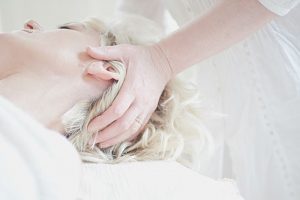
Fortunately, such restrictions can be detected and corrected. With a light touch, the CST practitioner evaluates the cranial sacral system by gently feeling various locations along the body to test for the ease of motion and rhythm of the cerebrospinal fluid pulsing around the brain and spinal cord. Soft-touch techniques are then used to release restrictions in any tissues and joints influencing the cranial sacral system.

By normalizing the environment around the brain and spinal cord and enhancing your body’s ability to self-correct, Cranial Sacral Therapy is able to alleviate a wide variety of dysfunctions.  These can range from chronic pain and sports injuries to stroke and neurological impairment.

  • Migraine Headaches

  • Chronic Pain

  • Motor-Coordination Impairments

  • Nerve Disorders

  • Orthopedic Problems

  • Brain Injuries

  • Spinal Cord Injuries

  • Learning Disabilities

  • Chronic Fatigue

  • Emotional Difficulties

  • Stress and Tension

  • Fibromyalgia

  • Temporomandibular Joint (TMJ) Dysfunction

  • Post-Traumatic Stress

  • Post-Surgical Rehab

Registered Massage Therapist Catherine Macdonald has advanced training in Cranial Sacral Therapy through the Upledger Institute. Contact Catherine at Maximum by Body ‘n Balance Physio in Collingwood (249) 499-4381 to discuss whether CST may be able to help you.
 
Is Dry Needling a Treatment For You?

Is Dry Needling a Treatment For You?

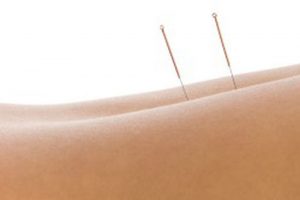
Otherwise known as intramuscular stimulation (IMS) or trigger point dry needling, dry needling is a skilled intervention that helps relieve neuromuscular pain and increase muscular function. This practice should not be confused with acupuncture, which is based in the traditions of ancient Chinese medicine; dry needling is unique to western medicine.

When executing this technique, the therapist will use a very thin needle to penetrate the skin and stimulate myofascial trigger points.  These trigger points are also referred to as muscle knots, or a motor point (the most excitable area of a muscle). The needle stays below the skins surface throughout treatment, threading in and out of the muscle knot.  When the needle is inserted into the trigger point it aids in the release of the shortened muscle, allowing it to relax through a twitch response or ‘reflexive spasm’.

While receiving this treatment; clients can expect to feel a dull to moderate aching sensation referred to as “deqi”. Effective dry needling requires the client to experience “deqi” as well as a local twitch response. Physiotherapists use dry needling to release trigger points, restore efficient muscle contraction (decrease muscle tension), increase range of motion, and decrease pain by releasing opioids (the body’s natural pain killers).

Dry needling has been proven to be a widely effective choice of treatment for many clients, particularly for low back pain, neck pain, shoulder pain, knee osteoarthritis (OA), hip OA, as well as headaches, piriformis syndrome, and whiplash.

All of our physiotherapists at Maximum perform both dry needling and acupuncture.


Acoustic Therapy…Does It Really Work?

Acoustic Therapy…Does It Really Work?

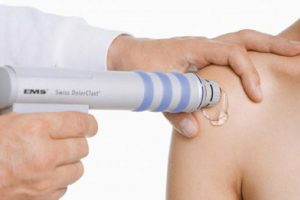
Acoustic Wave Therapy (AWT) is an innovative treatment for musculoskeletal conditions.  AWT is a series of high-energy percussions or radial pressure waves to the affected area using a transmitter head on the skin. The mechanical pressure of the acoustic waves provokes a response in the tissue that stimulates the formation of new blood vessels. This increase in blood supply/circulation accelerates the healing process. The radial pressure waves also stimulate the body’s natural self-healing processes by promoting a positive inflammatory response at the site, then assisting with regeneration and repair. AWT appears to be able to reset the healing process especially in stubborn chronic injuries where other conventional treatment and modalities have not been successful. The evidence for the use of AWT is overwhelming! In the last 10 years, over 300 articles and abstracts have been published regarding the efficacy of AWT. Of special note, many randomized controlled trials showed that AWT is safe and effective for treating plantar fasciitis (Gerdesmeyer et al. 2008) hamstring tendinitis (Cacchio et al. 2010), Achilles tendinopathy and jumper’s knee (Rompe et al. 2007), and calcific shoulder tendinitis (Bannuru et al, 2014). There has also been exponential growth in AWT use for trigger point therapy.

The most striking aspect of AWT is that it has a 75-85 percent success rate when combined with exercise.

For many injuries, AWT is a great non-invasive alternative to surgical procedures. For best results it is recommended that treatment be performed at one week intervals for a minimum of three treatments.

“regular exercise is really important to me and I have had a chronic high hamstring injury that was not improving with routine stretching, strengthening, and acupuncture!  I took the plunge, trying Acoustic Wave Therapy and was surprised to see that after 7 treatments (with my home stretching and strengthening program), I am finding significant improvement.  I am able to walk (even run!) up stairs without difficulty, bend forward on one foot, and have resumed jogging and biking.” Dr. Jennifer Young

Sue Underhill is a Registered Physiotherapist at Maximum by Body ‘n Balance Physio, and is trained in administering Acoustic Wave Therapy. Give us a call (249)499-4381 to find how Acoustic Wave Therapy can help you.

acoustic therapy

Four exercises to help your posture

Four exercises to help your posture

Today, many of us sit in front of the computer working all day, chasing that next promotion. You may find yourself in back-to-back meetings — or at your desk — straight through lunch hour. When was the last time you really paid attention to your posture? How is your lower back? How is your neck feeling?

According to the National Institutes of Health, back pain affects eight out of ten people. Our bodies were designed for walking and other movements throughout the day. We were not designed to sit in chairs for long periods of time with little movement. All that sitting puts our bodies at risk of having bad posture.

Bad posture can:

  • Cause some muscles to work harder than others, creating muscular imbalances.

  • Decrease the range of motion in your joints.

  • Interfere with breathing and damage your heart and lungs (due to a bent spine restricting the expansion of the rib cage).

  • Leave you tired (due to muscles working extra hard just to hold you up).

  • Lead to rounded shoulders, headaches, back pain, and all kinds of body aches.

Good posture means the muscles in your body align properly. That allows you to move efficiently in your daily activities. Does good posture seem out of your reach? Try these four easy steps:

1. Strengthen your core muscles.

  • Plank hold (15-30 seconds)

  • Partial crunches (8-12 times)

  • Side planks (15-30 seconds on each side)

  • Floor back extensions (8-12 times)

2. Strengthen and stretch your upper body to fix rounded shoulders.

  • Reverse dumbbell flies (8-12 times)

  • Rows with dumbbell (8-12 times)

  • Chest stretch (hold 10-15 seconds)

  • Upper back stretch (hold 10-15 seconds)

3. Strengthen and stretch your neck muscles.

  • Chin tuck (8-12 times)

  • Isometric holds from the left, right, front, and back of the head (15-30 seconds)

  • Chin to chest stretch (10-15 seconds)

  • Ear to shoulder stretch (10-15 seconds)

4. Strengthen and stretch your hip joints.

  • Bridges (8-12 times)

  • Laying side leg raises (8-12 times)

  • Standing quad stretch (10-15 times)

  • Laying hamstring stretch (10-15 times)

Perform these exercises two to three times a week, depending on your fitness level. Also, you can start with just one set of each exercise. As you get stronger, you’ll be able to add more sets without compromising form. It’s a good idea to check with your doctor before starting any new fitness routine.

Arthritis? We can help!

Arthritis? We can help!

Osteoarthritis? Physiotherapy can help! Osteoarthritis (OA) causes degeneration of the cartilage in joints and is present in more than 50% of people older than 60 years of age. The knee joint is commonly affected by OA, causing pain, stiffness, decreased activity and lost time at work.

Current research shows that physiotherapy can significantly reduce these symptoms. A recent study looked at the benefit of physiotherapy in patients diagnosed with moderate-to-severe knee OA. Outcomes were compared between a group of patients who had arthroscopic knee surgery followed by physiotherapy and a group who had physiotherapy only. After two years, there were no differences between those who had surgery and those who had physiotherapy alone with respect to pain, stiffness and physical function.

Another recent study compared the potential benefits of a home-based exercise program to a clinically-based physiotherapy program for patients with knee OA. After 4 weeks, those in the clinical physiotherapy group had an improvement of 52% in physical function compared to 26% in the home-exercise group. What does physiotherapy treatment consist of for knee OA? The physiotherapist will develop an individualized program depending on the patient’s current pain, physical function and goals. Treatment may consist of a stretching and strengthening program, manual therapy, education regarding the patient’s condition, ultrasound, laser and acupuncture.