
TLDR
Stretching alone rarely fixes persistent stiffness because it does not teach your body to control or use the range it temporarily gains. Physiotherapy for stiffness works by combining active mobility exercises, strengthening, and motor control training so your nervous system learns to trust and use new movement ranges. If stiffness keeps returning no matter how consistently you stretch, a physiotherapy assessment can help identify what is actually driving the restriction.
You stretch your hamstrings every morning. You roll out your hips before bed. You do the same back stretches you found online, and for about an hour afterward, things feel looser. Then you stand up from your desk, load your backpack, or head out for a skate, and the tightness is right back where it started.
Sound familiar? You are not doing it wrong. You are just working with an incomplete plan.
The widespread belief that stretching fixes stiffness is one of the most common misconceptions in movement and recovery. This post explains why stiffness keeps coming back, what passive stretching can and cannot do, and how physiotherapy builds the kind of mobility your body will actually hold onto. Whether you are managing low back pain, recovering from surgery, or trying to stay active through your 40s, 50s, and beyond, this is worth understanding.
Is Stretching the Same as Mobility?
No, and the difference matters more than most people realize. Passive stretching means holding a position and waiting for a muscle to feel looser. You are not generating force. You are not controlling the range. You are temporarily increasing tissue length, and that temporary feeling is real, but it does not automatically translate into movement your body trusts.
Mobility is different. Mobility is your ability to move through a range with control, strength, and coordination. It is not just touching your toes on a mat. It is bending to pick up a bag without bracing, squatting low enough to garden comfortably, or following through on a golf swing without your lower back seizing up.
Stretching is not bad. It is simply incomplete when used on its own. Improving mobility with physiotherapy means building on that foundation, adding the strength and motor control your body needs to actually use the range you are working for. The research supports this shift: rehabilitation literature has increasingly moved away from passive treatment alone, emphasizing that active exercise and education together produce more meaningful gains.
Why Does Stiffness Keep Coming Back After You Stretch?
Stiffness is rarely just about tight muscles. When it keeps returning despite consistent stretching, something else is usually driving it. Common contributors include:
- Muscle weakness that causes the body to guard or limit motion to protect a joint
- Poor motor control, meaning the brain and body are not coordinating movement efficiently
- A history of low back pain, sports injury, or surgery that changed how you move
- Nervous system sensitivity after pain, which leads the body to restrict range as a protective response
- Repetitive postures, training habits, or occupational demands that continuously load the same tissues
Stiffness is often a signal. It is your movement system flagging that something in the chain needs attention. Stretching one muscle in isolation rarely addresses that signal at its source. A full movement assessment is often what reveals where the restriction is actually coming from, and what type of work is likely to shift it.
What Is Active, Loaded Mobility and Why Does It Work?
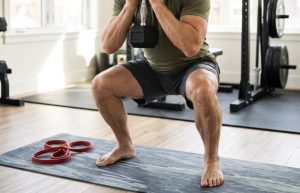
Active mobility exercises are movements where you use your own muscles to move into a range, hold it, and control it. You are not passively waiting. You are actively building ownership of that position.
Loaded mobility takes that a step further by adding appropriate resistance, body weight, tempo, or positioning. The goal is to build strength within the range you want to keep, not just brush the edges of it temporarily.
Here is why this rewires things at a deeper level: your nervous system is constantly assessing whether a movement is safe and useful. When you repeatedly move into a range with control and without pain, you give your brain evidence that the range is functional. Strength and coordination are that evidence. Passive stretching alone does not provide it in the same way.
Broad examples of this approach (not a prescription) include:
- Controlled hip hinges for low back and hamstring stiffness
- Split squat and lunge variations that build hip and ankle mobility under load
- Shoulder control drills for athletes recovering from upper body injuries
- Post-surgical progressions guided by healing stage and physician or surgical clearance
For restrictions tied to tendon or soft tissue sensitivity rather than strength or coordination alone, some clinics also use adjunct tools such as Shockwave Therapy alongside active mobility work, rather than in place of it.
Structured rehabilitation protocols consistently combine mobility work with motor control, endurance, and progressive strengthening rather than treating any of these as separate programs. That integrated approach is what physiotherapy for stiffness looks like in practice.
How Does Physiotherapy for Stiffness Build Usable Mobility?
At Maximum Physiotherapy, the approach follows a clear three-step framework: assess, relieve, and prevent or perform.
Assess
Before anything else, a physiotherapist identifies where the restriction is coming from. Is it joint range? Muscle capacity? Coordination? Post-op precautions? Pain sensitivity? Equally important is understanding what movement demands actually matter to you, whether that is getting back on the ski hill, returning to a labour-intensive job, or simply walking up stairs without stiffness in the morning.
Relieve
Hands-on care, education, and exercise modification work together to reduce what is holding your movement back. This is not the whole plan. Symptom relief is the starting point, paired with active work from the beginning so recovery does not stall the moment treatment stops.
Prevent and Perform
A personalized home program progresses from basic control to strength to activity-specific movement. The aim is not just feeling better in the clinic. It is getting you back to what moves you, whether that is sport, recreation, work, or daily life. We love finding ways to support our clients between appointments, not just during them. You will find practical starting points in our exercise programming resources and our posture exercise guide.
For anyone in Collingwood managing stiffness after injury, surgery, or years of repetitive movement demands, local physiotherapy access means you do not have to wait or commute to get this kind of assessment.
What Does a Smarter Mobility Plan Look Like?
A well-rounded plan works across several layers simultaneously. The table below gives a simple overview of what each component does and why it is included.
| Component | What It Does | Why It Matters |
| Gentle mobility work | Explores and introduces range | Prepares tissue and nervous system without overloading |
| Strengthening | Builds capacity to hold and use the range | Prevents the body from guarding and reverting |
| Motor control drills | Improves coordination between brain and body | Reduces compensations that cause stiffness patterns to return |
| Gradual loading | Prepares tissues for real-life demands | Bridges clinic progress to sport, work, or daily activity |
| Recovery habits | Pacing, sleep, movement variety | Reduces cumulative load and supports tissue recovery |
Post-op patients need individualized guidance based on tissue healing timelines and surgical instructions. Athletes and active adults often need sport-specific progressions rather than generic flexibility routines. If you are experiencing pain, swelling, numbness, worsening symptoms, or you are post-surgical, please seek assessment from a qualified health professional before beginning any new program.
Public health guidance on active living and injury prevention reinforces the importance of gradual, progressive loading rather than high-intensity or overly passive approaches, particularly after periods of reduced activity.
Does Stretching Still Have a Place in Your Routine?
Yes. Stretching is one tool in a larger toolbox, and it remains useful in the right context.
Stretching works well for short-term comfort after a long period of sitting or standing, as part of a warm-up or cool-down, to build body awareness, and to prepare tissues before active mobility or strength work. The problem is not stretching itself. The problem is treating it as a complete solution when the stiffness you are dealing with needs more than temporary tissue length changes.
A physiotherapist pairs stretching with strengthening, balance, coordination, and gradual exposure to the movements that matter to you. You do not have to stop stretching. You may need to upgrade the overall plan so that your stretching is doing what it is actually good at, rather than being asked to do everything on its own.
Key Takeaways
- Passive stretching temporarily increases tissue length but does not build the strength or coordination needed to hold onto a range of motion.
- Mobility is the ability to move through a range with control and confidence, not simply the ability to reach a position briefly.
- Stiffness that keeps returning after stretching often involves muscle weakness, poor motor control, nervous system sensitivity, or compensated movement patterns from past injury.
- Active and loaded mobility exercises train the nervous system to accept and use new ranges by building strength and coordination within those ranges.
- Effective physiotherapy for stiffness assesses the whole movement system and builds a progressive plan from relief through to real-life performance.
- Post-op patients and those with worsening symptoms, pain, or swelling need individualized assessment before starting a new mobility program.
Ready to Get Back to What Moves You?
If stiffness keeps returning no matter how consistently you stretch, it is worth asking why your body is protecting that range. More stretching alone is unlikely to change the answer.
Maximum by Body ‘n Balance Physiotherapy offers movement assessments that look beyond the symptom to understand what is actually driving your restriction. From there, the team builds a personalized plan to improve strength, control, and confidence, so you can Get Back to What Moves You.
If you are in Collingwood and ready to move better, book an assessment today and take the first step toward a plan that goes further than stretching.
Related reading:
Frequently Asked Questions
Can physiotherapy reduce stiffness and improve mobility?
Physiotherapy may help by identifying the underlying cause of stiffness and building a personalized plan that includes mobility work, strengthening, motor control training, education, and a gradual return to the activities that matter to you. Outcomes vary depending on the individual, the nature of the restriction, and how consistently the plan is followed. Many people notice improved movement and reduced discomfort over the course of a well-structured physiotherapy program.
Should I stop stretching if I always feel stiff?
Not necessarily. Stretching is still useful for comfort, warm-ups, and body awareness. If stiffness keeps coming back, the more important question is whether your current routine includes active mobility and strengthening work so your body builds the capacity to control the ranges you are trying to gain. Adding those elements is often more productive than stretching longer or more frequently.
Is stiffness after surgery or a sports injury normal?
Some stiffness following surgery or injury is a common part of the healing process, but the appropriate response depends on your healing stage, pain levels, swelling, movement restrictions, and the guidance of your medical team. A physiotherapist can provide individualized advice based on where you are in recovery, what tissues are involved, and what progression is appropriate for your specific situation.
Recent Comments